
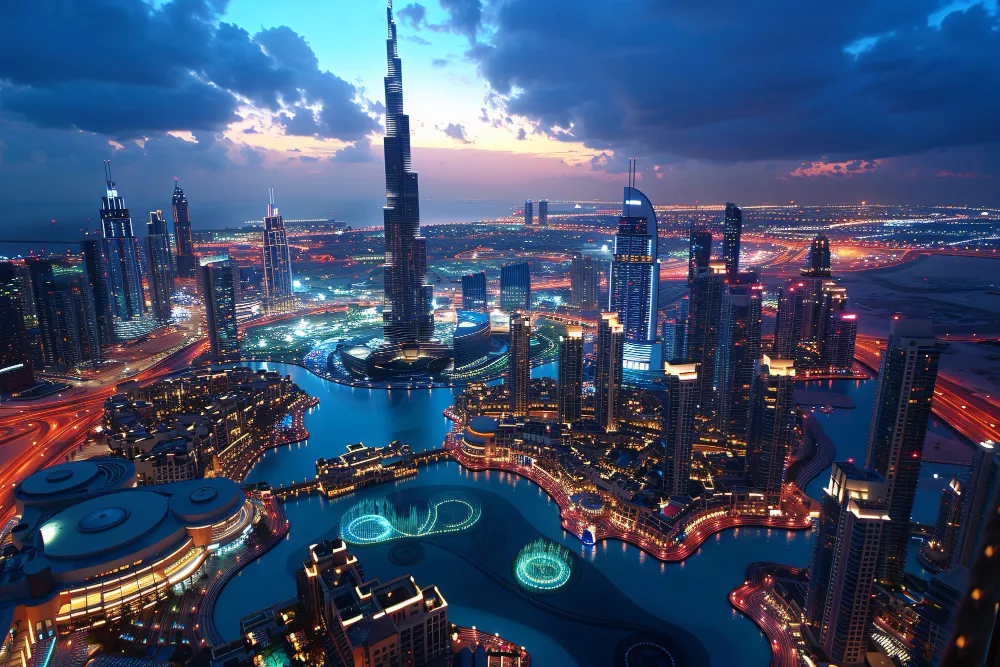
A few years ago, if you attended an international property meet or spoke to cross-border investors, the same cities dominated the conversation. London. New York. Singapore. Everyone had an opinion. Everyone had a comparison.
That conversation still exists, but something else has quietly entered the room. Dubai.
At AMIS Development, we do not see this shift in headlines. We see it in behaviour. Buyers are not asking if Dubai is worth considering anymore. They arrive already convinced. The questions now are specific. Location. Quality. Timeline. In 2026, global investors are choosing to buy luxury residences in Dubai because the decision feels settled long before the first call.
This did not happen suddenly. Dubai has been laying this groundwork for years, piece by piece. Some of it was policy. Some of it was infrastructure. A lot of it was simply consistency. Over time, that consistency changed perception.
When Dubai Stopped Needing an Explanation
There was a time when Dubai had to prove itself. That phase is over.
Today, international buyers approach Dubai as they would any established global market. The legal framework is familiar. Ownership rules are clear. Transactions are predictable. For investors used to complexity elsewhere, this clarity stands out.
What also stands out is how deliberately the city has diversified. Real estate here is no longer tied to a single industry or cycle. That matters. Stability, especially for luxury investors, is not optional. Without it, premium property loses its meaning.
Dubai now offers something many cities struggle to maintain. A sense of direction that extends beyond the next quarter.
Why 2026 Marks a Shift in Mindset
Timing is critical in real estate, but context has the same importance.
In many classical markets, investors are dealing with increased taxes, stricter laws, and lower returns. The calculation has become less favorable. Even long-favoured cities feel constrained.
Dubai presents a different equation. Ownership remains straightforward. Capital gains on property are not taxed. Transaction costs stay competitive. The need for top-grade living places is still there, mainly in the case of well-designed projects.
This explains why investors who were once very careful now confidently want to purchase luxury apartments in Dubai. The hesitation has faded. What remains is a clear comparison.
Luxury Here Is About How Life Feels
Luxury in Dubai does not announce itself loudly. It shows up in details that make daily life easier.
Homes are designed to be lived in, not merely photographed. Space is treated as a necessity, not a privilege. Amenities are integrated into communities instead of isolated in towers.
When global buyers compare luxury markets, they often remark on how functional Dubai feels. There is efficiency, but also comfort. Scale, without impersonality.
At AMIS Development, we see luxury as something that should disappear into everyday life. That philosophy resonates strongly with investors who value usability over excess.
Returns That Still Respect Capital
Yield remains part of the conversation, and for good reason.
While returns in many global cities have compressed to the point of caution, Dubai continues to deliver realistic income potential, particularly in the luxury segment. High-quality residences attract long-term tenants. Corporate demand remains steady. Families relocating for work or lifestyle seek homes that feel permanent.
This consistency reduces vacancy risk. It also reassures investors who expect performance without constant intervention.
The Quiet Importance of Currency
Currency stability rarely makes headlines, yet it shapes decisions more than most people admit.
The UAE dirham’s link to the US dollar offers predictability. For international investors navigating volatile exchange environments, that predictability becomes a form of protection.
It is one reason many prefer to buy luxury residences in Dubai rather than pursue higher but uncertain gains elsewhere. Preservation matters just as much as growth.
Ownership That Supports Mobility
Property ownership in Dubai has evolved beyond bricks and mortar.
Residency pathways linked to real estate have changed how buyers think about commitment. Ownership now supports flexibility. Travel becomes easier. Business planning feels lighter. Family decisions carry less friction.
This layer is emotional as much as practical. It explains why many investors return to Dubai after considering other markets. The city fits into their lives, not the other way around.
Infrastructure That Follows Through
Dubai has a reputation for planning ahead, and it earns it.
Infrastructure here does not lag demand. Roads expand. Transit evolves. Airports scale. Digital systems keep pace with growth. For property investors, this reliability protects long-term value.
A luxury residence depends on its surroundings. Dubai understands that connection and invests accordingly.
The Lifestyle Factor People Struggle to Define
There is something else, harder to measure.
Dubai offers momentum without disorder. It feels international without feeling fragmented. At the same time, luxury and convenience. People effortlessly transition among work, play, and family.
Medical service, education, security, and communication. These factors determine the quality of life, especially for the buyers who plan to occupy their properties full-time or even part-time.
Why Developer Trust Now Drives Decisions
As global interest increases, buyers become sharper.
They examine track records. They value communication. They want timelines they can trust. At AMIS Development, we understand that credibility is not built through promises. It is built through delivery.
Luxury buyers are methodical. They compare. They return to developers who speak clearly and act consistently.
Why Off-Plan Still Makes Sense
Off-plan luxury continues to attract attention for practical reasons.
Earlier pricing. Structured payments. Time to plan capital deployment. When combined with strong locations and responsible development, off-plan purchases remain a strategic choice for long-term investors.
What Global Investors Actually Prioritise
Despite cultural differences, investor priorities converge. Clarity. Stability. Sustainable demand. Exit flexibility. And a lifestyle dimension that adds meaning beyond numbers.
Dubai continues to meet these expectations with consistency.
Risk, Perspective, and Long-Term Thinking
Markets move. Prices adjust. Smart investors accept this.
Those who buy luxury residences in Dubai with patience and perspective tend to navigate cycles calmly. This is not a market driven by speculation anymore. It is shaped by planners.
Why This Momentum Is Unlikely to Fade
Looking ahead, the fundamentals remain supportive. Population growth. Business inflows. Global mobility. These forces continue to strengthen residential demand.
Luxury properties benefit from a limited supply and selective buyers. As the market matures, quality becomes more visible.
Conclusion
In 2026, deciding to buy luxury residences in Dubai is no longer a bold leap. It is a grounded choice. At AMIS Development, we see investors arriving with focus. They are not chasing trends. They are responding to consistency.
If you are considering your next move, take time to understand the city, the communities, and the developers shaping its future. The right investment does not feel urgent. It feels steady.
Dubai has reached that point. For many global investors, it is where long-term confidence finally settles.